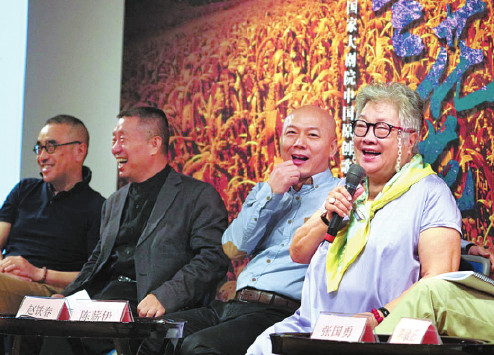
Chinese Opera 'Lan Huahua'
Introduction
"Lan Huahua", an original Chinese opera, made its debut at the National Centre for the Performing Arts (NCPA) in Beijing on October 1, 2017. Based on a popular folk song from Shaanxi province, the opera brings to life a tragic narrative about a young woman's struggles against feudal societal norms.
The opera is a significant contribution to China's contemporary operatic landscape, marking the NCPA's commitment to commissioning and developing homegrown works. This debut showcased the blending of traditional Chinese musical elements with operatic forms, a bold and innovative endeavor in the Chinese cultural scene.
Historical and Cultural Context
The opera "Lan Huahua" is deeply rooted in the culture of Shaanxi, where the original folk song originates. The song, first popularized in the mid-20th century, tells the story of a woman named Lan Huahua, who, in the face of oppressive societal expectations, seeks true love and freedom but ultimately faces tragic consequences. The narrative of Lan Huahua resonates with themes of rebellion and the fight for individual freedom against the backdrop of traditional rural society. The opera's adaptation of this folk song is a significant cultural effort to elevate regional Chinese stories to a grand operatic scale.
Creative Vision and Features
Directed by Chen Xinyi, an established figure in the Chinese theater scene, "Lan Huahua" was envisioned as a bold departure from traditional opera productions. Chen's directorial background in both Western and Chinese opera provided a unique framework for the creation of this piece. The opera integrates elements of traditional Chinese music, incorporating instruments like the banhu, alongside Western orchestral arrangements. This fusion creates a soundscape that is both locally rooted and globally appealing.
Musically, the opera was crafted by a team of composers, with Zhang Guoyong conducting the NCPA Chorus and the China NCPA Orchestra, accompanied by the Qingdao Symphony Orchestra. The opera's score is marked by its use of folk melodies, which are seamlessly woven into the orchestral composition to maintain the authenticity of the original song while enhancing the dramatic tension. The music shifts in style throughout the opera, reflecting the emotional and narrative changes, such as the transition from the tender moments of love between Lan Huahua and her lover to the darker, more dissonant tones reflecting societal pressure and personal tragedy.
Dramatic Structure and Performance
The opera unfolds in three acts, each highlighting a pivotal moment in Lan Huahua's tragic journey. The first act introduces the budding romance between Lan Huahua and her lover, Luotuozi, set against the backdrop of gossip and societal judgment. The second act deepens the conflict, showcasing the manipulation of the village's authority figures, including Squire Zhou, who forces Lan Huahua into a tragic marriage with a man she does not love. The emotional climax arrives in the final act, where Lan Huahua, facing the weight of her circumstances, is driven to a desperate act, symbolizing her ultimate rebellion against her fate.
The production features strong performances from a cast of seasoned Chinese opera singers, including Zhao Lili, Guan Zhijing, and Xue Haoyin, whose vocal performances bring depth to the characters' emotional struggles. The sets, designed by Huo Tingxiao, and the costumes, crafted by Chen Tongxun, further immerse the audience in the world of rural Shaanxi during the feudal era, with a focus on authenticity and emotional resonance.
"Lan Huahua" stands out not only for its compelling narrative and fusion of musical styles but also for its ability to address universal themes through a distinctly Chinese lens.








